Hospitality is a Revolution
Love Given Freely is a Political Act of Defiance
By: Lisa M. Hayes, Threshold Ministries
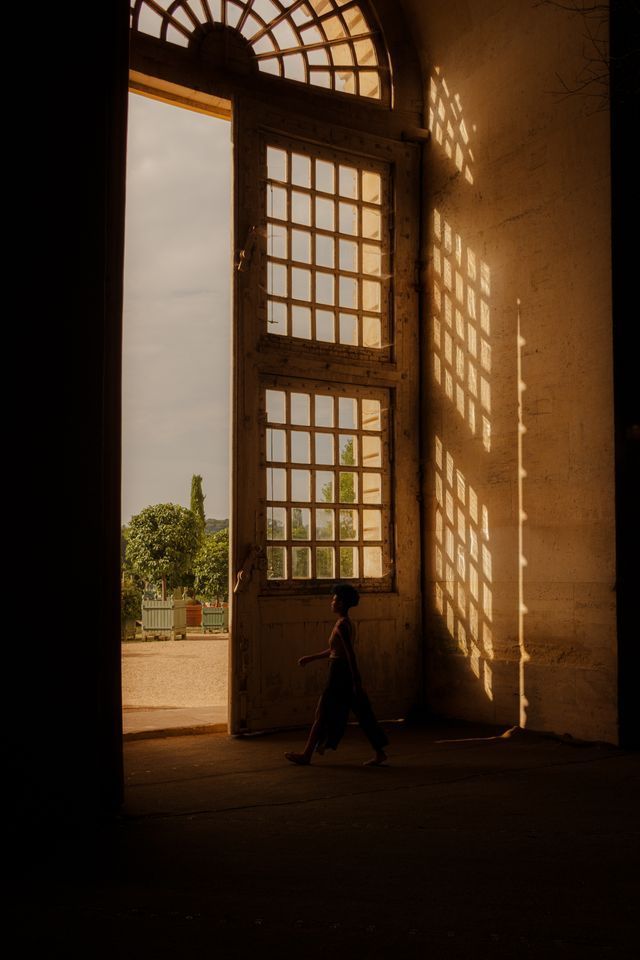
There is something quietly revolutionary about opening a door and telling someone they are welcome.
No application. No examination of their worthiness. No requirement that they arrive with the correct beliefs, a respectable history, or a convincing explanation of why they need help.
Just welcome.
We live in a world that has become remarkably skilled at deciding who deserves what.
Who deserves healthcare. Who deserves housing. Who deserves safety. Who deserves compassion. Who deserves a place at the table.
We have constructed elaborate systems for sorting human beings into categories of deserving and undeserving, productive and unproductive, respectable and suspicious.
And then we wonder why so many people feel profoundly alone.
I think hospitality offers us a different way of organizing the world.
The difference between hospitality and charity
Charity can preserve a hierarchy.
There is someone with something to give and someone who needs to receive it. Someone in a position of generosity and someone in a position of gratitude.
Charity can be beautiful and necessary. But it can also leave the underlying arrangement of power entirely undisturbed.
Hospitality asks something different of us.
Hospitality says that the person arriving at our door is not a project.
They are not an opportunity for us to demonstrate our goodness.
They are not required to be grateful enough, agreeable enough, or sufficiently improved by the experience.
They are a human being.
And they belong.
That distinction matters.
It changes the way we offer food, healthcare, companionship, shelter, and spiritual community.
It changes whose comfort we prioritize.
It changes who gets to speak and who is expected to listen.
It changes whether we are building a place where people can receive assistance or a place where people can actually belong.
Welcome without agreement
One of the more difficult aspects of genuine hospitality is that we must resist the temptation to make belonging conditional on agreement.
We do not have to share every opinion, every belief, or every life experience to recognize one another's humanity.
This does not mean that anything goes.
A genuinely welcoming community has boundaries. Cruelty, racism, misogyny, homophobia, transphobia, and abuse do not become acceptable simply because we wish to be inclusive.
We cannot create safety for vulnerable people while requiring them to tolerate the very behaviors that threaten them.
Hospitality is not the absence of boundaries.
It is the deliberate creation of conditions in which people can arrive without surrendering their dignity.
It means protecting the welcome we offer.
I requires us to think carefully about whose presence has historically been treated as inconvenient, controversial, or conditional.
The sacredness of ordinary care
At Threshold Ministries, I find myself thinking about the small, practical expressions of this philosophy.
A doctor willing to see someone who cannot afford an appointment.
A place to sit when the heat becomes unbearable.
A gathering where a person can arrive without pretending to believe something they don't.
A conversation in which nobody feels compelled to perform spiritual enlightenment.
These things may not look particularly grand.
But there is something sacred about making life a little less difficult for another human being.
A glass of water.
A chair in the shade.
Medical attention offered without judgment.
Someone remembering your name.
Someone asking how you are and remaining long enough to hear the answer.
We tend to imagine profound spiritual acts as dramatic gestures of sacrifice, devotion, or transformation.
But perhaps one of the most profound things we can do is make room.
Actual room.
Room for the person who is tired.
Room for the person who is grieving.
Room for the person whose life is complicated.
Room for someone who has been told, in a hundred different ways, that they are too much, not enough, or simply unwelcome.
A world with more doors
I don't think hospitality alone will dismantle unjust systems.
People need enforceable rights, accessible healthcare, economic security, political representation, and institutions that are accountable to the communities they serve.
A warm welcome is not a substitute for justice.
But hospitality can be one way we practice the world we are trying to build.
It allows us to reject, in small and tangible ways, the idea that everything must be earned, purchased, justified, or deserved.
It reminds us that care need not be a transaction.
It gives us an opportunity to become the kind of people who recognize that another person's dignity is not ours to grant or withhold.
That dignity was never ours to decide.
Perhaps this week, we might consider where we could make a little more room.
Not only in our homes, although that is sometimes a beautiful place to begin.
In our organizations. Our neighborhoods. Our conversations. Our institutions. Our understanding of who belongs.
Whose presence have we made unnecessarily difficult?
Who has been waiting for an invitation?
Who is standing outside a door that we have the power to open?
Hospitality is a radical act because it begins with a simple refusal.
We refuse to make another human being prove they are worthy of welcome.
And then we open the door.
With love and a little holy trouble,
Lisa
Threshold Ministries
Come as you are. There is room for you.
Threshold Ministries is an inclusive, justice-centered spiritual community rooted in dignity, compassionate action, and the conviction that belonging should never be a privilege reserved for the fortunate.
Our work includes free community healthcare in La Misión, gatherings, rituals, and practical care for our neighbors.
Whether you need community, want to help create it, or simply wish to explore a different way of being in the world, you are welcome here.
There is a place for you at the Threshold.